
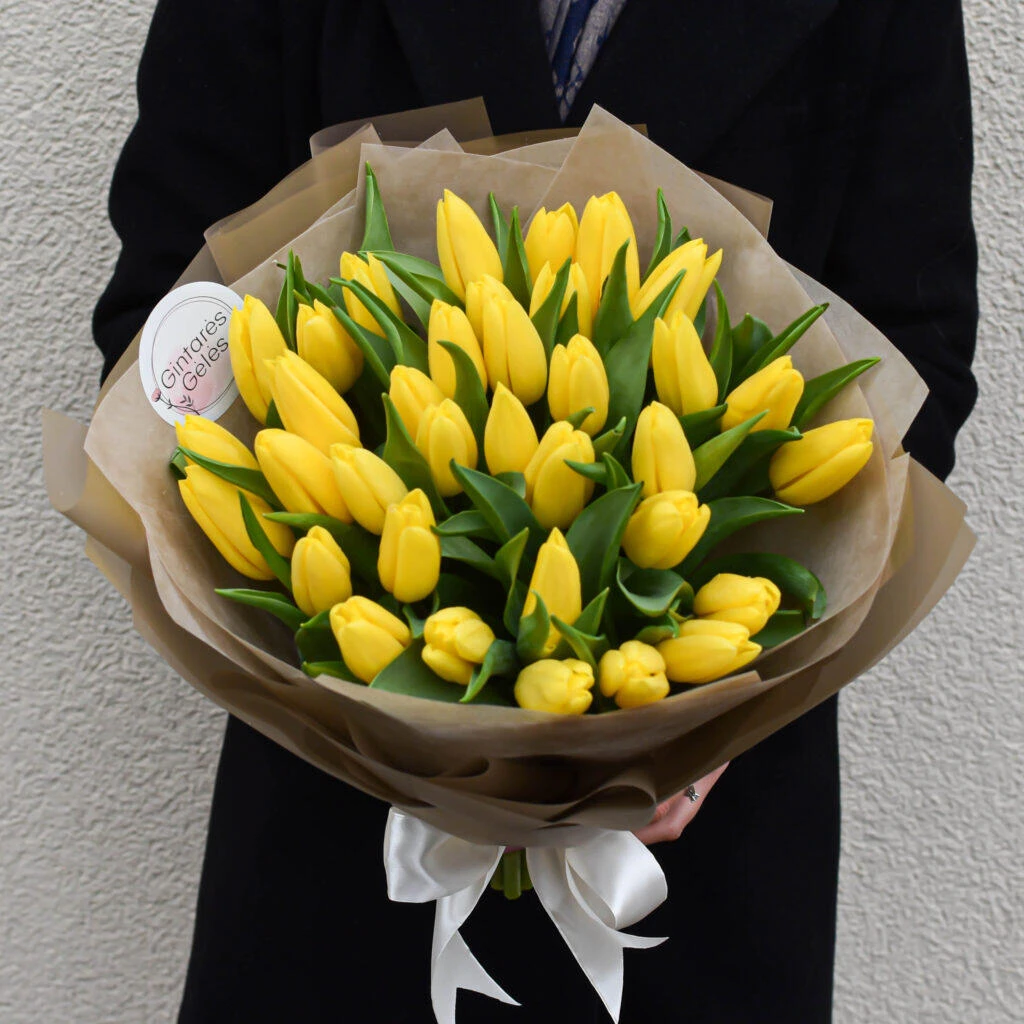
March 8 is International Women’s Day. In Lithuania it is a working day, yet flowers remain the favourite gift for mothers, wives, girlfriends, colleagues and friends. In this article – where the holiday comes from, how it is celebrated in different countries, what tulip colours mean and why mimosa is given on March 8. Ready-made flowers for the occasion can be found in our March 8th flowers section.
Where Women’s Day comes from
The tradition of Women’s Day was born at the beginning of the 20th century, when women in Europe and the USA demanded the right to vote, equal rights and better working conditions.
- 1909 – the first National Woman’s Day was held in the USA.
- 1910 – at an international women’s conference in Copenhagen, the German activist Clara Zetkin proposed holding an international women’s day every year.
- 1911 – it was first celebrated in Austria, Denmark, Germany and Switzerland – at that time on March 19.
- 1917 – on March 8 (February 23 in the old calendar) the women’s strike “For bread and peace” in Petrograd became one of the events that started the revolution. Since then the date of the holiday has been March 8.
- 1975 – the United Nations began officially marking International Women’s Day and now gives it a different theme every year.
Today, in many countries, this day is an occasion to thank the women close to us and tell them how much we appreciate them – most often with flowers.
March 8 in Lithuania
In Soviet times March 8 was a public holiday and one of the most widely celebrated days of the year, so for many people it is still associated with tulips, mimosa and greetings at work. After independence was restored it is no longer a day off, but the tradition of greeting mothers, wives, colleagues and teachers has remained. Today March 8 feels more like a celebration of spring and of attention to women: men buy flowers, colleagues are congratulated at work and children give their mothers tulips.
How Women’s Day is celebrated in other countries
- Italy – the symbol of “Festa della donna” is a sprig of yellow mimosa, given to women by men, colleagues and friends.
- Germany – in Berlin, March 8 has been a public holiday since 2019.
- China – many workplaces give women a shorter working day.
- Some former Soviet countries (e.g. Kazakhstan, Moldova) – March 8 is still a public holiday and a big celebration with flowers and greetings.
- USA and the United Kingdom – it is marked as a day of equal rights and women’s achievements; March is Women’s History Month there.
Tulips and the meaning of their colours
Tulips are a symbol of early spring and the flower most often associated with Women’s Day. You can also give a bouquet a meaning:
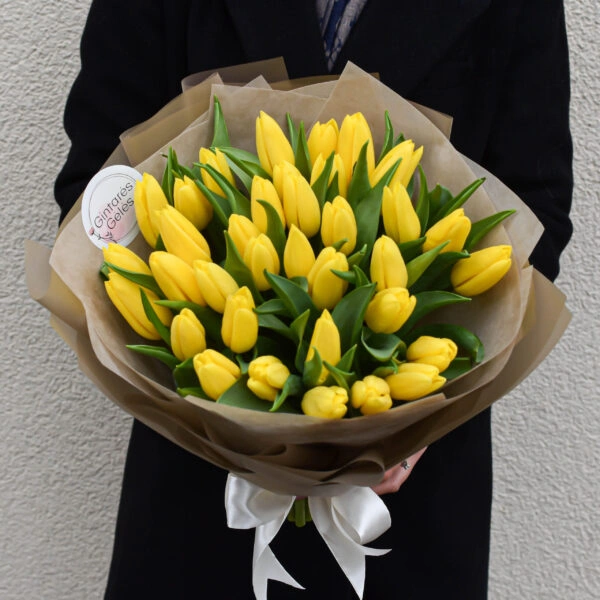
- Yellow – joy, light and wishes of a sunny mood. Suitable for colleagues and friends.
- Pink – tenderness, care and gratitude. A popular choice for mum.
- Red – love and passion. For a girlfriend or wife.
- White – respect and purity. Suitable for a teacher, a manager or an older woman.
- Purple – elegance and distinction.
When giving a bouquet, it is important that the number of flowers is odd – in Lithuania even numbers are reserved for funerals. More about this in the article How many roses to give and what the number means.

Why mimosa is given on March 8
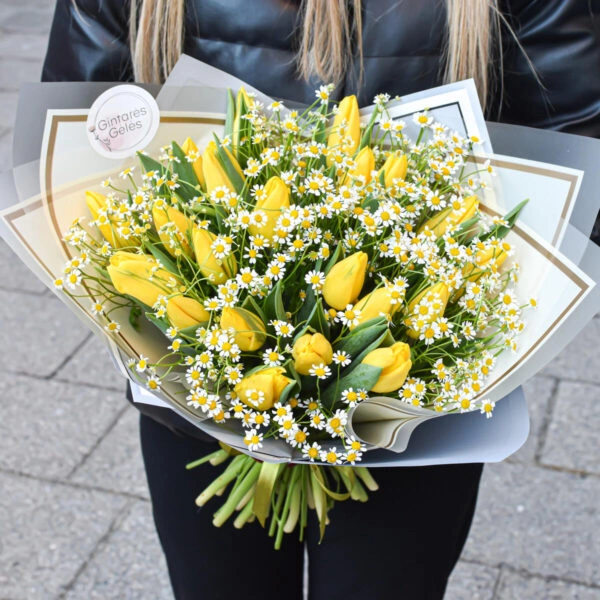
Mimosa (silver wattle) blooms in early March, so its fluffy yellow sprigs became a sign of spring and of Women’s Day. In Italy mimosa became the symbol of March 8 after the Second World War – it was cheap, easy to find and bloomed just in time. In Lithuania many people remember mimosa from Soviet times, when it was one of the few flowers on sale in March. Today a sprig of mimosa nicely complements a bouquet of tulips or freesias.
Other spring flowers
- Freesias – fragrant, light and reminiscent of spring.
- Roses – a universal choice: white and pink suit a mother or colleague, red – a girlfriend.
- Eustomas and alstroemerias – last a long time in a vase, so the bouquet delights longer.
- Gypsophila – adds lightness to a bouquet.
If you want a gift that lasts longer than a few days, choose soap flowers or a sleeping rose under a dome – they need no water and do not wilt.
Flowers for colleagues
When greeting several colleagues, people usually choose identical small bouquets or small flower boxes – that way nobody feels left out. You can add a greeting card with your own message to each gift: write it on the product page. If you are congratulating the whole team, you can also order one larger arrangement for the office.
When to order
On the eve of March 8 and on the day itself many flowers are ordered, so we recommend placing your order in advance and choosing the delivery day you want. In 2027 March 8 falls on a Monday, so colleagues are easiest to greet on the day itself, and family members also on the weekend before.
How to keep tulips fresh longer
Tulips keep growing in the vase and bend towards the light – this is natural. Put them in cold water, cut the stems at an angle and keep them in a cool place, away from fruit and radiators.