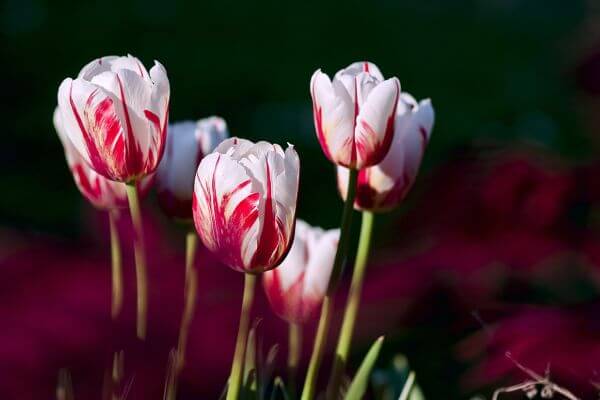
Caring for tulips is not a very complicated process. Still, every lover of these colourful spring flowers should know a few tips that will help keep them blooming beautifully all season – or alive for longer than a week in a vase. Here are the most important care tips for cut tulips and tulips growing in the ground!
Caring for planted tulips
Tulips are perennial flowers that usually bloom in early spring. Admittedly, leaves poking out of the ground can be seen at the end of winter – depending on the variety and planting time. Warm winters encourage tulips to start growing earlier, while recurring cold weather can slow their growth. Here are a few of the most important things everyone growing tulips in their garden should know.
What conditions do planted tulips need?


- Tulips prefer places that are fully lit by the sun at least in the afternoon. Shade will do too – it is important to remember that although tulips love light, they will not tolerate too much heat.
- Choose neutral or slightly acidic soil that drains water well. Too much moisture can rot tulip bulbs.
- Tulips should be spaced 10–15 cm apart – keep this in mind when choosing where to plant them.
When to plant tulips?
- Tulip bulbs are best planted in autumn, six to eight weeks before the first frosts freeze the ground. Once frosts begin, it is recommended to mulch the tulips.
- It is best to plant when the soil temperature is no higher than 10 degrees Celsius – then tulips root better.
- Once you have bought tulip bulbs, don’t delay – the bulbs should not stay unplanted for long. Don’t put off planting if the time is already right.
How to plant tulips?

- Plant tulip bulbs at a depth of three bulbs, or two if the soil is heavier and not very loose.
- Plant the bulbs with the pointed end up – the leaves will grow from it, while the round side will put out roots. After covering with soil, press it down lightly with your hands.
- Water the freshly planted bulbs – although tulips are not particularly thirsty plants, the bulbs need water to start growing.
- If you are planting perennial tulips, use a balanced fertiliser when planting in autumn. The bulbs will hold all the substances the tulip needs for about a year. Use organic matter, compost or pressed, slow-release fertiliser made for tulips.
How to care for planted tulips?

- If it rains often enough (at least once a week), tulips don’t need watering. However, if the ground is dry and it hasn’t rained for a long time, freshly planted bulbs should be watered until the ground freezes. Never water tulips when it isn’t necessary – a lot of water in particular will rot the bulbs.
- To prevent the bulbs from rotting when it rains a lot, mix wood chips, sand, perlite or other materials that increase drainage into the soil.
- Cut off wilted blooms, but never damage the leaves.
- In spring, when the leaves of autumn-planted tulips start to appear, use the same fertiliser you used when planting them.
- Let the leaves stay for about six weeks after the tulips have finished blooming – they store the nutrients needed for the next blooming period. When the leaves turn yellow and die back, you can remove them.
Caring for cut tulips
Cut tulips, like all other cut flowers, need some care. Of course, you can simply put them in water and leave them alone – but in that case these flowers will wilt very quickly. There are a few florist tricks suitable for many cut flowers, which you will find here – they will help keep tulips looking great for as long as possible.
Tips for caring for cut tulips

As mentioned earlier, the same care steps as for many other cut flowers can be applied to cut tulips. Here are a few tricks florists use that will help keep your bouquet wonderful for as long as possible!
Keep trimming the tulip stems
Regularly trimming the stems will help keep tulips charming for longer. Freshly cut stems increase the flowers’ water uptake.
Get rid of the lower leaves
The lower leaves of tulips often soak in the water they stand in – this is not good. Cut these leaves off – then they won’t start rotting and spoiling the water, and the flower will spend less energy on keeping the leaves and more on the bloom itself.
Put tulips in cold water
Warm water is not the best choice for tulips. It is also not advisable to follow traditional tips of splashing vodka or gin into the tulip water or dropping in a coin – it won’t do any good.
Keep topping up the vase with fresh water

Tulips are very thirsty flowers – that is why it is recommended to top up the vase with cold water every couple of days or even more often.
Don’t put tulips in a vase with daffodils
It is not advisable to put tulips and flowers of the daffodil family in the same vase. If you do, you can expect yellowed, quickly wilting tulips – this is because daffodil sap contains certain alkaloids that are poisonous to tulips.
Don’t keep tulips in direct sunlight
Cut flowers should not be kept in brightly lit or very warm places (e.g. next to radiators). This will make them wilt faster, as cut flowers no longer grow actively and their needs change considerably. It is better to give the vase a cool spot away from the window and heat sources.
We hope this article will help you care for tulips and that their blooms will delight you all spring!